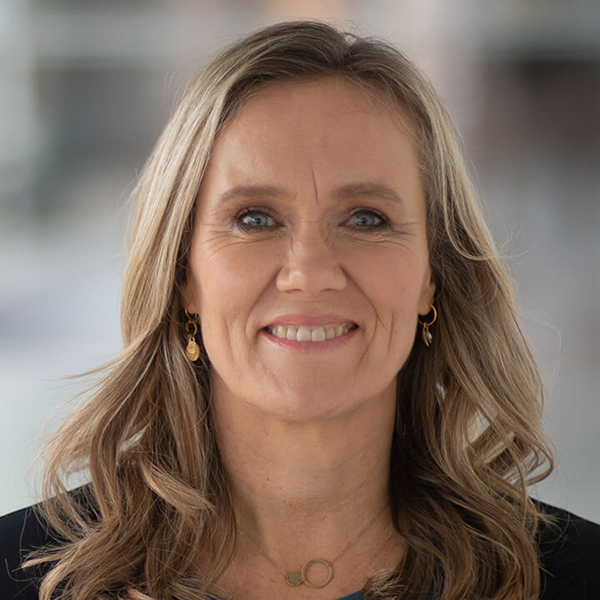
Jacqueline van Onzenoort
Organizational Development Consultant and Author of Organizational Acupuncture
Where organizations get stuck, more management, new processes or restructuring often follow. Jacqueline van Onzenoort first looks at what's actually holding back development. Where is energy stagnating, which patterns have teams trapped, and where does one targeted intervention set the entire system in motion? She calls this organization acupuncture: a systemic way of looking at and intervening that uses tension as a source of information and change potential. She wrote a book on the subject with the same name. After fifteen years in HR at Rabobank International, KPN and Randstad, she has been coaching executives and management teams since 2009, ranging from the energy sector and commercial services to government, education, healthcare and the social domain.
Book Jacqueline for
Languages
Price indication
Biography
From HR Manager to Organizational Acupuncturist
Jacqueline van Onzenoort studied General Social Sciences and wrote her thesis on self-organization. She worked for fifteen years in HR positions at Rabobank International, KPN and Randstad. Since 2009, she has been working as an independent organizational developer, executive coach, team coach and leadership trainer, guiding boards, management teams and executives in enhancing their organizations' agility and learning capacity.
The practice of change from within
She worked for, among others, Eneco, Stedin, Copper8, Cordaan, AxionContinu, the Ministry of the Interior and Kingdom Relations, the Ministry of Justice and Security, the Labor Inspectorate, CBS, NEN, KVK, COA and 's Heeren Loo. This gives her insight into both the systemic world of strategy, structure and policy as well as the human reality beneath it.
Organizations are living systems
An organization cannot be fixed like a machine, yet reorganization remains one of the most widely used instruments. People, relationships, beliefs, emotions and ingrained patterns continuously influence each other. What appears as resistance or sluggishness is therefore rarely the whole problem. Jacqueline makes visible what plays out beneath the surface: which tensions are being avoided, where information doesn't flow freely, and which structures unintentionally maintain that pattern?
The book and the method
In Organisational Acupuncture: needling agile and learning organisations, she consolidates her practical experience into a concrete methodology. This practice also forms the foundation for her lectures: recognisable examples from organisations where change gets stuck, the patterns that become visible underneath, and the small interventions that actually create movement.
Expertise
Organizational Acupuncture
Organizational acupuncture starts with the tension that becomes tangible or visible within an organization. Jacqueline helps examine the underlying pattern and choose a targeted approach. Change thus takes the form of a conscious rhythm: observe, experiment, learn, and adjust. That is something different from rolling out a trajectory and hoping it takes hold.
Agile and Learning Organizations
Agility requires more than faster decision-making, agile working, or flexible structures. An agile organization needs people and teams who take responsibility, share information, leverage differences, and continue learning under pressure. Jacqueline therefore connects organizational design with emotional resilience, team maturity, team learning, and self-aware leadership.
The team as a pivot point
In teams, strategy, structure, culture and leadership come together. This is where it becomes visible whether people truly experience space, speak up and take responsibility for the whole. Jacqueline shows how psychological safety, clear frameworks and a consistent rhythm of reflection strengthen collective intelligence.
Self-Aware Leadership
What leaders pay attention to, reward, allow or avoid becomes part of the culture. Jacqueline helps leaders recognize their beliefs, emotions and automatic patterns, understand their effect on others, and consciously choose behaviour that serves their purpose. When a leader perceives and acts differently, the entire system can shift with them.
Themes
Her own organization acupuncture
How small, targeted interventions break through stubborn patterns and get a stuck system moving again.
The agile organization starts with the team
About team maturity, psychological safety and team learning as drivers of organizational development.
From Changing to Learning
Why future-proof organizations learn to perceive, reflect, experiment and adjust during their work.
Conscious Leadership Under Pressure
How a leader's true values become visible when interests clash, results disappoint and uncertainty increases.
Digital transformation is people work
About the impact of digitalization and AI on leadership, collaboration, craftsmanship and the moral compass of organizations.
Why Jacqueline
A distinctive philosophy
Organizational acupuncture gives leaders a clear language and an applicable method for complex change challenges. Not a variation of what they already know, but a different way of looking at things.
More than thirty years of experience
From fifteen years of HR at major employers to more than fifteen years of coaching leaders and teams through transformation. She knows the practice from the inside, in the market, and in the public sector.
Connects people and systems
She moves between personal leadership, team dynamics and organizational design, making visible how these levels influence each other. Most speakers choose one of the three.
Complexity remains intact
Jacqueline makes patterns understandable and manageable without reducing reality to a step-by-step plan. For audiences who have already seen multiple change programs fail, that is more credible.
She also focuses on her own share of responsibility.
She invites leaders not only to look at employees or the system, but also at themselves. Not from a sense of guilt, but from a sense of influence and responsibility.
Sharp and interactive
Her lectures make people think and invite them to apply the insights directly to their own organizational practice.
Talks
Organizational acupuncture: small incisions, big movement
45 - 60 minutesWhy Problems Keep Coming Back
Despite reorganizations, new processes and change programs, the same problem keeps returning. Jacqueline shows how the visible problem distracts attention from the pattern that actually holds the organization in place.
Tension as a Source of Information
Participants become acquainted with the method: from tension and pattern recognition to a focused approach, an experiment, and collective learning. In this process, tension is not a disruption but the signal you act upon.
A concrete starting point
They go home with a different way of looking at things and a first approach to their own change challenge.
The agile organisation starts with the team
45 - 60 minutesThe team as the pivotal point
An organization only becomes agile when people and teams can handle uncertainty, responsibility and difference. That's where strategy and daily practice meet.
What Team Maturity Requires
Jacqueline makes visible how a steady rhythm of dialogue, reflection and experimentation helps break patterns, and what it takes to maintain that rhythm.
Safety without complacency
Participants discover how they can strengthen psychological safety and collective intelligence without losing their results-driven focus.
Digital transformation is people's work
45 - 60 minutesMore than processes
Digitalization and AI also affect craftsmanship, professional identity, power dynamics, and decision-making. Those who steer only by technology and implementation miss an important part of the transformation.
What image of humanity underlies your choices?
Jacqueline invites leaders to explore what they want to keep human and what learning climate their employees need to collectively make sense of change.
Providing direction and creating space
This creates conscious leadership that maintains direction while simultaneously allowing room for experimentation, dialogue and moral deliberation.