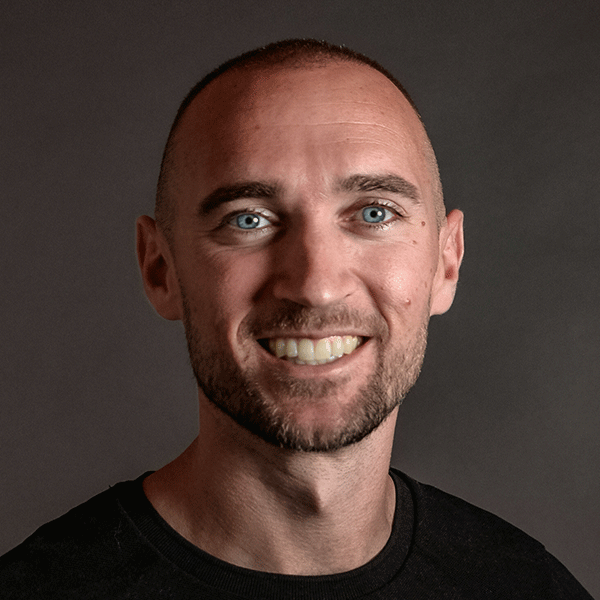
Caspar Wesselink
Former commando teaching executives to act under pressure
Step into the world of Caspar, the former Sniper of the Commando Corps, who translates his operational planning experience into the business world. For more than ten years, he learned how to create structured plans in extreme conditions where lives depend on it. With PlanHuijs, he brings that discipline to executives, management teams, and teams that want to prepare their organization for disruptions in the workplace before they become a reality. His approach: reducing complexity to executable steps, without losing sharpness. Not an abstract leadership story. Instead, a methodical way of thinking that works at all levels, from the boardroom to the shop floor.
Book Caspar for
Languages
Price indication
Biography
From Sniper to Civil Planning Discipline
Caspar Wesselink served for more than ten years in the Special Forces as a Sniper and Safety Expert. During exercises and operations, he developed countless plans within his team and experienced firsthand how systematically mapping out one's own capabilities, threats, and environment not only leads to better risk insight but also to a clearer view of the entire playing field in which an organization operates.
Safety officer at the Dutch Special Forces
After his operational years, Caspar worked as a safety officer within the Dutch Special Forces, where he was responsible for all safety-related matters, including safety planning for missions to, among others, Afghanistan. In that role, he saw what happens when risk thinking is not part of an organization's culture: the best planning remains on paper, and you cannot prepare effectively, no matter how good the plan is.
The translation to business
That insight has been decisive for what Caspar is doing now. With PlanHuijs, he translates the military planning discipline into the civilian sector, not as a method on paper, but as a structured process through which organizations and governments learn to understand their environment, recognize risks, and involve their people in the process. Because only when employees are part of the thinking do they also become owners of the actions.
Nowadays
Caspar works from PlanHuijs with management boards, MTs, and teams of organizations and governments. Previous clients include the Province of South Holland and Soellaart Outdoor & Wintersport. His approach combines operational authority with intellectual sharpness: he distills complexity into actionable steps without losing the strength of the content.
Expertise
Making risk management concrete
Preparation is more than a document In organizations, risk thinking is often assigned to one department — compliance, risk management, audit. A document or a report is created there. On paper, it is correct. But when a disruption occurs, the people who need to act often do not know what it says or how to deal with it. Caspar shows how it can be different.
A shared planning discipline
The core of Caspar's approach is a planning methodology that can be applied at every level in an organization — from management to team members. When everyone uses the same structure, the same language, and the same lens, a shared way of working emerges that shifts preparation from isolated training sessions to daily practice.
Workplace experience for management
Caspar's distinction lies in his dual authority. As a Sniper, he worked under pressure on the shop floor; as a safety expert, he worked at the management level on deployment plans. This combination enables him to show management how the shop floor thinks and to show team members how management plans.
Analytical and actionable
Caspar's style is methodical, not rhetorical. He distills complexity to its essence, without oversimplification. For participants, this means: clear narrative, incisive questions, and concrete steps that can be directly applied to their own work.
Themes
Preparation for disruptions
How organizations can systematically prepare for diverse disruptions such as staff shortages, supply chain issues, and power outages. Not by creating more reports, but through a shared way of working that impacts the culture.
Risk thinking at all levels
How risk thinking can be extracted from the compliance department and integrated into daily decision-making. From management to the workplace.
What-if thinking as a strategic instrument
How the what-if question not only covers risks but also uncovers strategic opportunities.
Operational planning translated to business
What businesses can learn from the way Special Forces plan, and why that discipline works outside of the military context.
From improvisation to anticipation
How an organization transitions from reacting to disruptions to anticipating them — without getting lost in scenarios or compliance.
Why Caspar
Operational authority
Caspar worked for more than ten years as a Sniper in conditions where poor planning was not corrected by a restart, but by consequences. He brings that experience to every session.
Workplace knowledge for management
Since Caspar has worked at both operational and managerial levels, he can translate between those two worlds, a skill that many speakers lack.
Analytical to the core
Caspar's style is not that of the storyteller, but of the analyst. He distills complexity into usable steps, without losing sharpness.
Directly applicable
Participants leave a session of Caspar not only with inspiration, but with a framework that is usable tomorrow in their own work.
No rhetorical show
Caspar's authority comes from experience, not from theater. For management teams and executives who prefer sharpness over spectacle.
Talks
Lectures for Directors and Management
45 to 60 minutesA lecture for directors who want their organization to anticipate rather than improvise. Caspar demonstrates how the Special Forces plan, why risk thinking does not belong in a separate department, and what questions a management team should ask itself to no longer improvise during disruptions. Participants discover how risk thinking not only protects but also uncovers strategic opportunities and when preparation loses value due to excess.
Work Sessions for MTs
3 to 4 hoursA work session in which the MT itself goes through the PlanHuijs method. The same discipline with which the Dutch Special Forces operate, applied to their own organization. No practice scenario, but the own reality. At the end, the MT is able to get a clear view of its own risks, knows which teams are handling which risks, and every risk leaves the room with an assignment and an owner.
Work sessions for teams
3 to 4 hoursA work session in which teams thoroughly elaborate on a risk assigned by the management team (MT). Following the same method as their executive board. The result: a detailed action plan with contingencies and what-if questions, immediately applicable to their own work.