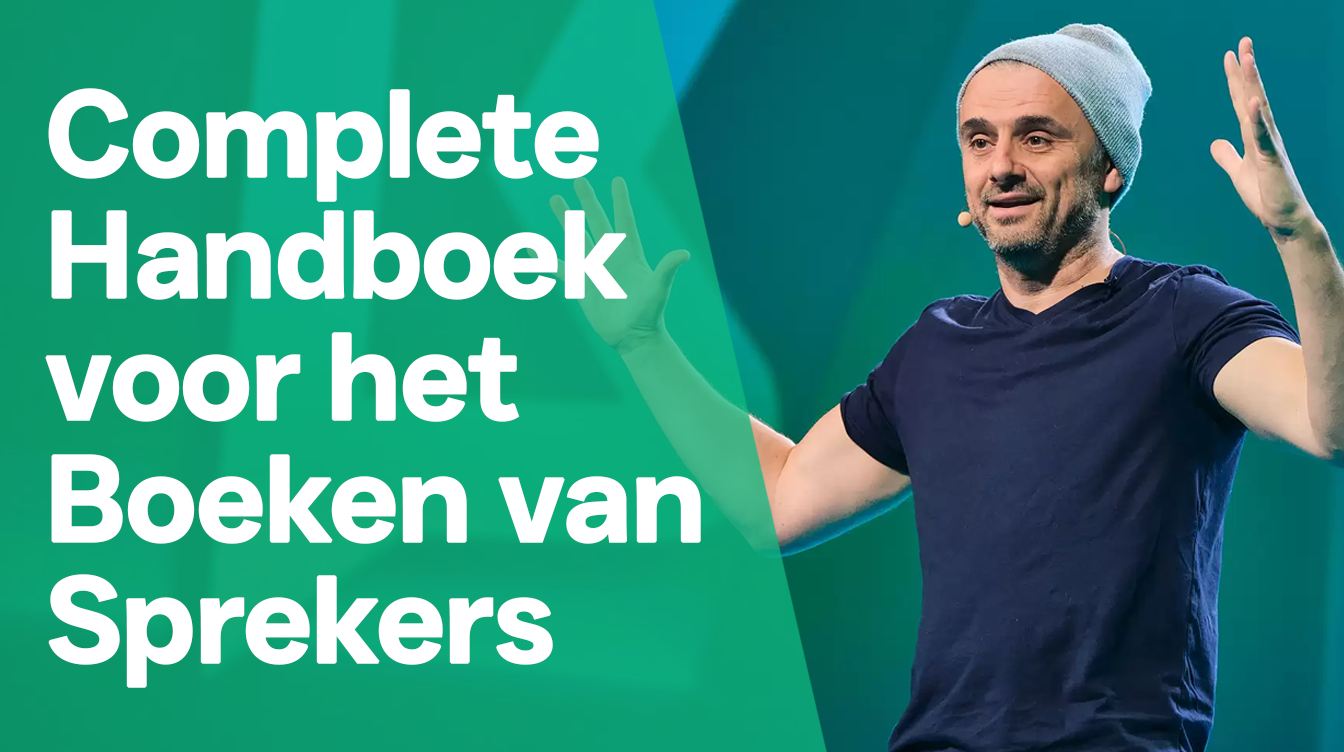
Complete Guide for Finding and Booking the Right Speaker
9 May 2026
This handbook is your compact starting point for finding and booking the perfect speaker for team days, New Year's gatherings, client days, or conferences in 2026.
Speakers can fulfill various roles, such as inspiring, informing, entertaining, or a combination thereof, depending on the event's objectives. Think of entrepreneurs, scientists, artists, journalists, or experts from sectors such as healthcare, education, culture, and technology.
The market for speakers has grown significantly post-COVID, with a shift toward hybrid events. This makes making the right choices more important than ever. A good speaker can inform, inspire, captivate, and motivate the audience, which is essential for the promotion of an event.
Below you will find an overview of 8 core topics – each with a link to a comprehensive guide.
Overview: the 8 steps in this handbook
In 15 minutes, you will know which direction to take:
Which speaker do you need for your event – determine the purpose of your event and make an informed decision about which speaker you need
The types of speakers to choose from – Understand the different types of speakers and where their strengths lie
The difference between speakers and moderators – Often still confusing for many parties
Booking a famous speaker: yes or no? – The pros and cons weighed against each other
The cost of speakers and everything about budgets – Understand where the costs lie when booking certain speakers
Booking through a speakers bureau or directly? – What are the benefits of an intermediary like a speakers bureau?
How does booking through a speakers bureau work? – Walk through the entire process from inquiry to booking
The 7 points of attention on the event day itself – What should you look out for to let your speaker perform optimally?
1. Which speaker do you need for your event?
Before you start looking for a speaker, it is important to be clear about what you want to achieve with the event, such as motivating employees or sharing knowledge. Analyze both the background of the audience and that of the speaker to make an optimal match. Expert advice is essential here to choose the right speaker.
Focus on three decision factors: the goal of your meeting (inspire, inform, or activate), the type of audience (management, participants, clients), and the desired impact afterward. Share your thoughts and expectations with the speakers bureau or advisor so they can guide you optimally. Consider an IT company organizing a client day in September 2026 about AI and innovation with plenty of interaction.
→ Read the in-depth guide on determining your ideal speaker profile.
2. Different types of speakers: inspirers, experts, and moderators
Not every event requires the same kind of speaker. There are different types of speakers, such as keynote speakers, moderators, and experts who focus on specific topics like technology, leadership, or personal development. The type of speaker you choose should align with the needs and interests of the audience, which can range from business professionals to students or creatives. When selecting a speaker, it is important to pay close attention to their expertise and the topic they speak about to ensure the right match for your event.
| Type | Focus | Ideal for |
|---|---|---|
| Inspirational speakers | Storytelling and energy | New Year's gatherings, Kick-offs, etc. |
| Experts | Knowledge transfer and cases | Seminars and lectures |
| Moderators | Time management and interaction | Conferences with multiple speakers and award shows |
To achieve the desired effect, it is essential to leverage the speaker's strength and utilize their personal power and expertise for maximum impact.
Speakers must be able to tell relevant stories that connect with the audience's world. Consider a mix if your program lasts longer than 2 hours.
→ View the comprehensive guide per speaker type and determine which one you need.
3. The big difference between speakers and moderators
These are often confused, even though the roles and expectations are substantially different:
A speaker fills a block of 30-60 minutes with their own keynote or lecture
A moderator hosts the entire meeting, introduces speakers, ensures audience engagement, and guides the program by using practical examples to make the content tangible
Moderators are involved earlier in the pre-discussion (script, timing, formats) and can guide the process so everything runs smoothly
Rates are usually higher for moderators due to longer presence. Finding and booking the right speaker is a multi-step process aimed at matching the message with the audience's needs.
→ Learn more about all the differences between speakers and moderators.
4. Should you book a famous speaker or not? The pros and cons
Many organizations first think of famous names from TV, sports, or media. When choosing a speaker, factors such as fame, experience, customization, and travel time must be considered.
Pros: higher attendance, wow factor, promotional value
Cons: higher fee (often starting from €5,000+), less customization, pressure on the program
Less famous subject-specific speakers often offer more content relevance and room for interaction. Moreover, you can rely on their substantive expertise and commitment to the subject. A good speaker seamlessly aligns with the needs and interests of your target group and can inspire the audience to action or participation. It is therefore important to think about who your audience is and what they want to learn or experience.
→ Discover when booking famous speakers is a smart move.
5. What does a speaker cost and does this fit your budget?
It is important to set the budget for the speaker in advance, as professional speakers often cost more than €1,000. Global price ranges in 2025-2026:
Starting speakers: from €500-1,500
Experienced experts: €2,000-5,000
Famous names: €10,000+
Costs consist of the fee, travel expenses, and sometimes accommodation or customization. For a medium-sized corporate event (100-150 people), a speaker budget of €3,000-6,000 fits well within the overall picture alongside location and catering.
→ Read everything here about the costs you will encounter when booking a speaker.
6. Should you book through a speakers bureau or directly with the speaker?
Both routes are common in 2026. References from previous clients can help verify a speaker's reliability and impact.
| Route | Advantages |
|---|---|
| Bureau | Wide range, time savings, safety net in case of cancellation, helps you focus on content and event success |
| Directly via speaker | Short lines of communication, flexibility, potentially lower costs |
A volunteer association that books a speaker once a year can work fine directly. A large company that organizes events every quarter benefits from bureaus.
→ Check here which option works best for your situation.
7. How does booking a speaker through a speakers bureau work?
When booking a speaker, it is important to record all agreements in writing in a contract, containing details such as date, time, location, fee, and any travel expenses. Recording these agreements is a shared responsibility between you and the bureau. It is common for payment to be completed 21 days before the event.
→ Learn more about the entire process of booking speakers through a speakers bureau.
8. The 7 things to keep in mind when you have a speaker at your event
The work doesn't stop at the booking. A clear briefing with expectations and the room's composition is crucial during the speaker's preparation. For a successful lecture, the speaker should think about the core message and the audience.
Green Room – A lockable space for the speaker(s)
Technology – For a successful performance, the technology must align with the speaker's needs and wishes
Recordings and rights – What are you and aren't you allowed to record audiovisually and distribute digitally?
Catering – One of the biggest complaints from speakers: the catering
Interaction – Do you expect the speaker to stay for a while after the talk?
Stage presence – A well-organized stage is half of a successful talk
Speaker host – A designated contact person who welcomes and guides the speaker
→ View the full checklist with explanations and examples of the 7 points of attention.
FAQ – frequently asked questions about booking speakers
How far in advance should I book a speaker?
For popular months (May-June and September-November), you ideally book 3-6 months in advance. For smaller internal sessions, 4-6 weeks may be sufficient, but last-minute bookings limit your availability. Confirm the desired date before you start looking for names.
Am I allowed to video record or stream the lecture?
This is never a given and must be recorded in writing in the agreement beforehand. There is often a difference between internal use and public sharing, with potential additional costs. Discussing this in the first phase prevents surprises.
How do I ensure the content of the lecture aligns with our organization?
Good communication with the speaker is essential; plan a meeting beforehand to clearly discuss the goal, the audience's background, and expectations. Also, share your thoughts and expectations with the speaker so they can optimally respond to the audience's wishes. Provide concrete examples, internal terms, and recent developments so the speaker can incorporate them.
What if the speaker gets sick or cancels at the last minute?
Bureaus can often quickly propose an equivalent replacement. Establish the procedure for cancellations in the contract beforehand. For direct agreements with independent speakers, a force majeure clause should be standard.
Can we also use the speaker for a workshop or break-out session?
Many speakers offer an interactive workshop in addition to a keynote. It is advisable to schedule an introductory meeting with the speaker to discuss combination possibilities. This significantly increases the impact of your event.