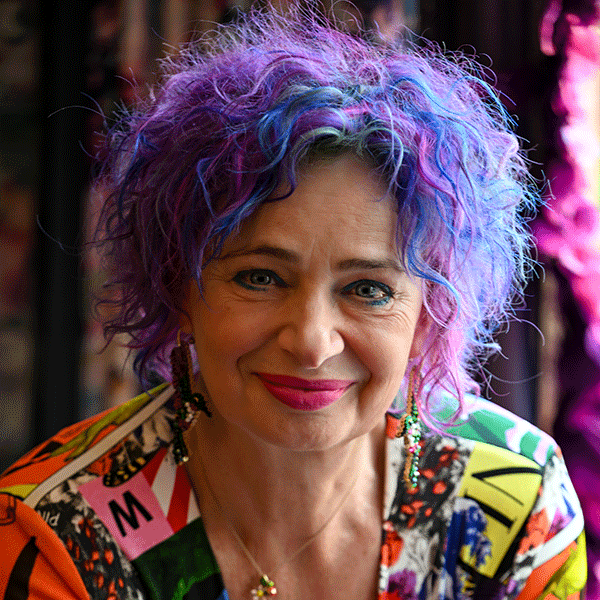
Marianne Heemskerk
Author on financial independence
Marianne Heemskerk earned a top salary as a business unit director by the time she was thirty. She flew business class, knew exactly what she wanted, and had one principle: financial independence. Until she had children, stopped working at her husband's insistence, and inadvertently lost control of her finances. When he died in 2020, the tax advisor called four hours later. He offered his condolences and advised her to sell the house as quickly as possible. What followed was no abstract lesson but a confrontation with the false sense of security in which she had lived for years. In the Netherlands, eight out of ten women are financially dependent on their partner. With her bestseller, her theatrical show DRMMA, and her lectures, Marianne reaches thousands of women and men. Without self-pity, with humor.
Book Marianne for
Languages
Price indication
Biography
The career woman who had everything in order
Marianne Heemskerk built her career as a business unit director and achieved at a young age what she had set out to do: work hard in an enjoyable job, travel extensively, earn well and, most importantly, be financially independent. She deliberately calculated in guilders, because her salary target—the amount that meant 'success' to her—would no longer add up otherwise.
How the steering wheel slipped from our grasp unnoticed
When she had children, she stopped working at her husband's insistence. Step by step, she became what she had never wanted to be: a woman who was completely financially dependent and received pocket money. Not through one single decision, but because the division of tasks grew that way. Imperceptibly. Completely ordinary.
Four hours after death
In 2020, her husband died following a risky operation. Four hours later, the tax advisor called with advice to sell the house quickly. It turned out to be eighty percent commercially financed, with tens of thousands of euros in interest per quarter. Only a fraction of it remained in the account, and she had no access to anything else: no joint accounts, no pension, no life insurance. No safety net.
From Personal Story to Stage
Marianne proved to be no exception. Eight out of ten Dutch women are financially dependent on their partner, and when that support disappears, they often suffer a significant setback. She calls that trauma on trauma. Not because these women are unintelligent, but because that's how it has grown over time. Now she uses her story to shake others awake, through her bestseller "My Husband Always Takes Care of That," her theater show DRMMA, and her lectures.
Expertise
How Dependency Creeps In
The core of Marianne's story is that there is rarely a moment when someone chooses dependency. It grows: one partner arranges the mortgage, the other works less, bills remain in one name. Marianne makes that creeping shift visible and shows at which points people unknowingly relinquish control. Including those who are convinced that their situation is different.
The Financial Reality After Loss
What happens when a partner passes away, Marianne knows in detail: bank accounts you can't access, loans that turn out to be insured differently than expected, obligations that continue while income stops. She addresses which provisions are most regretted in hindsight, such as pension, life insurance, access to accounts, and why these are precisely what's missing in seemingly well-organized situations.
Grief and Decisions That Cannot Wait
The painful coincidence in her story is that the most important financial decisions fall at the moment when someone is mentally least equipped to make them. Marianne speaks about this with authority, and with the nuance that you can't prepare for everything. But enough to give yourself room to breathe later.
The conversation people put off
Talking about money with your partner feels like expressing distrust, so it often doesn't happen. Marianne gives people the language to have that conversation anyway: which questions to ask, when to ask them, and how to ensure the discussion stays focused on agreements rather than the relationship itself.
Themes
Financial independence for women
Why eight out of ten Dutch women are financially dependent on their partner, and why this is rarely a conscious choice.
Financial False Security
How the comfort of a relationship quietly takes the place of self-determination. About the assumptions that only prove true or false when things go wrong.
What happens financially in case of loss
Death, divorce or work disability: what's at stake, who to call and which documents you'd want to have.
Grief and Direction at Once
Making financial decisions at the moment you're least capable of doing so. About what that does to people and how to make it more bearable.
The conversation about money in a relationship
Why partners avoid the conversation, which questions you actually ask and how to do that without it being about distrust.
Sustainable Employability and Work
Why stopping or reducing work has financial consequences years later. Relevant for HR, employers and anyone considering that choice.
Why Marianne
She was the woman who thought she had it all figured out
Not an outsider warning, but someone who earned top salaries themselves and still gave it up. That's precisely why the audience recognizes themselves in this person, rather than distancing themselves from it.
Wake up call without blame
Marianne puts her finger on an uncomfortable spot, but doesn't point fingers at anyone. That difference determines whether an audience goes into resistance or actually takes action.
Humor on a Heavy Subject
She tells her story without self-pity and with self-deprecating humor. This makes it bearable to listen to and makes it stick.
Concrete, not abstract
Every session delivers something people can get started with that very same day. Not a list of tips, but the first step you can take yourself.
Business experience as a foundation
Her years as a business unit director mean she is just as comfortable speaking at an HR conference as she is at a women's network event. She knows both worlds from the inside.
An underexposed topic
Financial dependency of women is rarely discussed on stage, yet it affects a large part of every audience. For a program that wants to stand out, that's exactly the reason to book her.
Talks
My husband always takes care of that
45 to 60 minutesShe was exactly the woman this wouldn't happen to.
Marianne tells her own story: from business unit director with a top salary to pocket money from her husband, without ever having a moment where she chose this.
Four hours after death
The phone call from the tax advisor, the mortgaged house and the discovery that there was no safety net. Not a doomsday story but a confrontation, told without self-pity and with humor.
What you can still do today
Eight out of ten Dutch women is financially dependent on her partner. The session ends concretely: which questions do you ask, what do you check and which first step do you start tonight.
Other collaboration formats
T.B.D.Panel discussion
Marianne represents the woman who seemed to have everything well organized. She asks the uncomfortable questions, names what others sidestep, and ensures the conversation is about something meaningful.
Tailor-made presentation
For HR conferences, women's networks, or gatherings on sustainable employability. Not a list of tips, but stories about relationships, money, grief, and agency — without jargon and with self-mockery.
Chairmanship of the Day
With a mischievous wink and a humorous touch of friction, Marianne creates warmth and brings the audience together. She finds the common thread, even when the themes are heavy.
Photos
Related speakers

Jelle Hermus
MindsetBestselling author on freedom, happiness, and meaning
 Featured
Laurien Verstraten
Media & EntertainmentModerator and RTL Z presenter

Wouter de Jong
ResilienceBestselling author and trainer in mental fitness